
Product Description
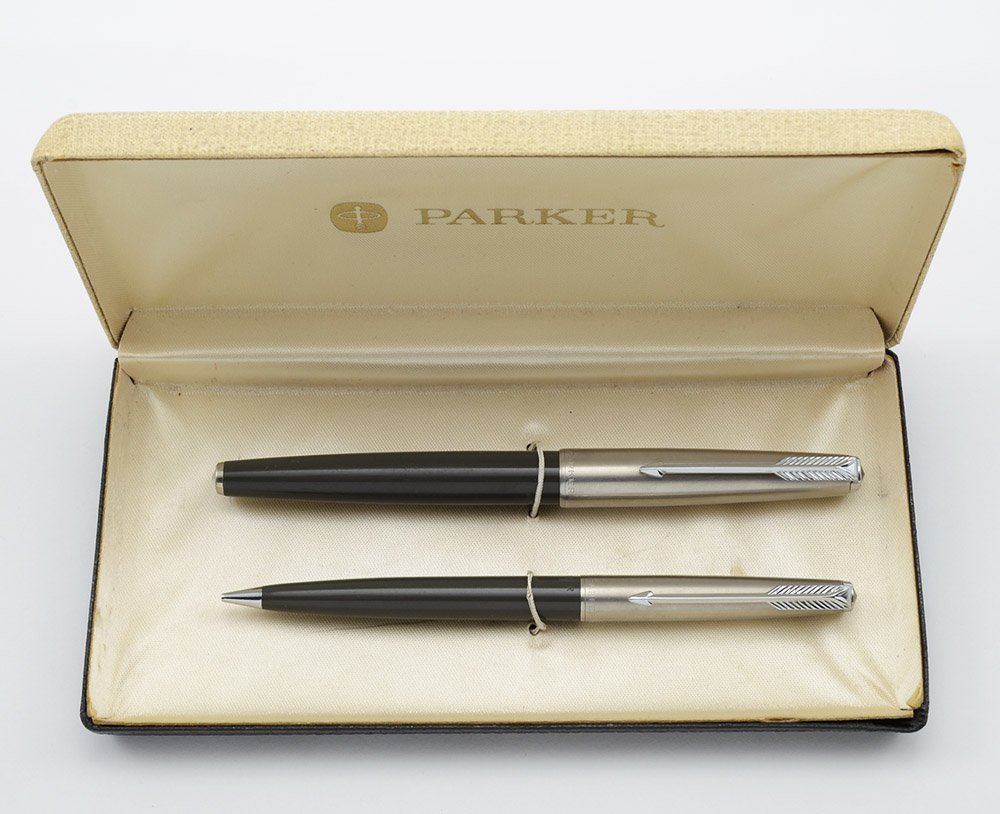
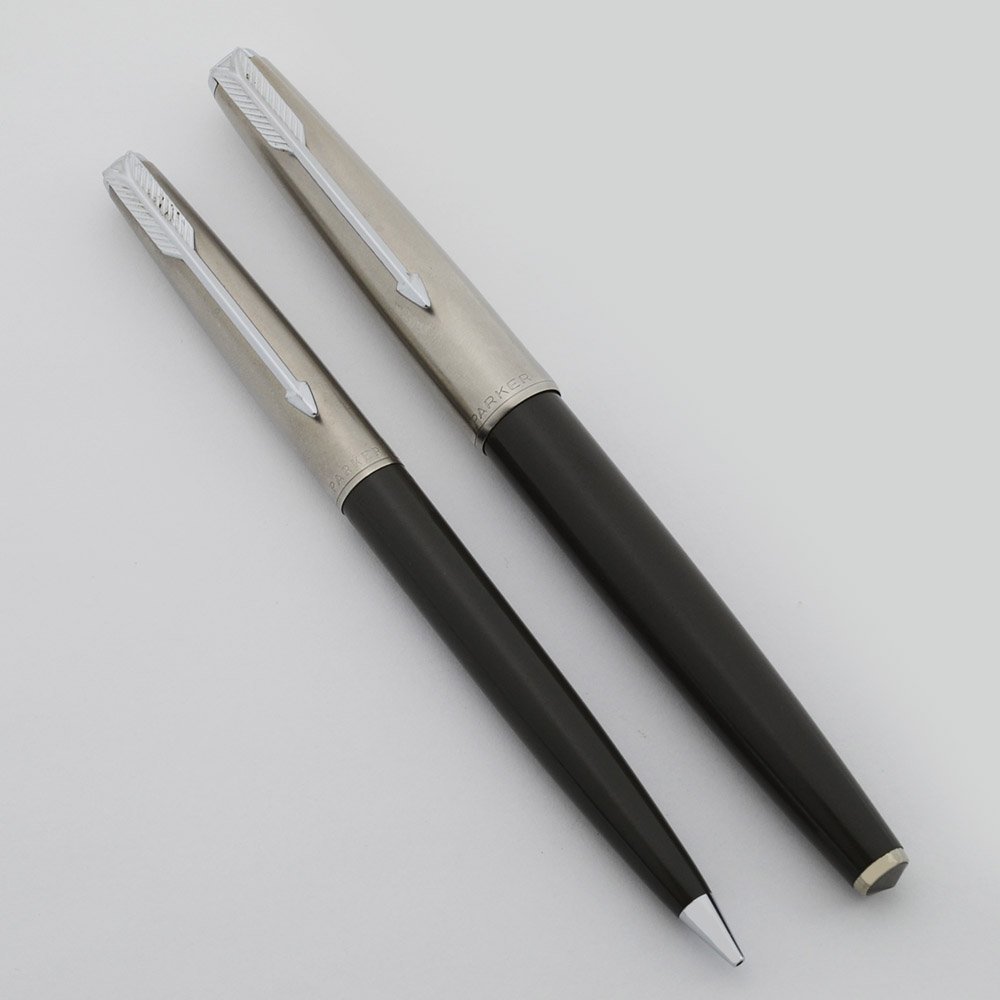
Type Fountain pen and mechanical pencil set
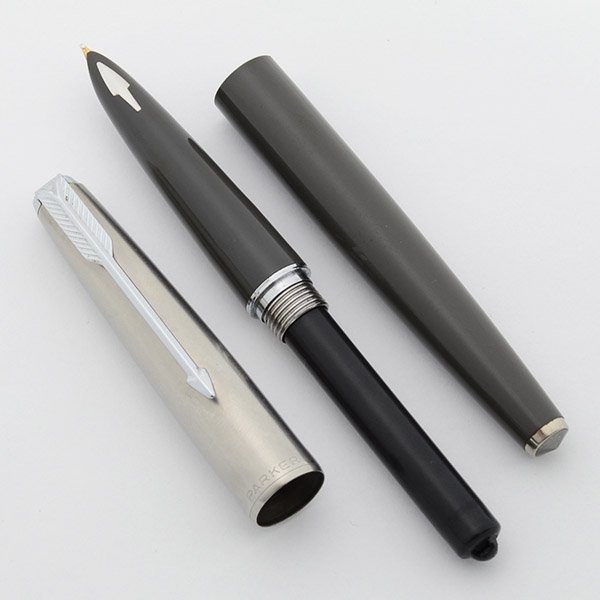
Product Name Parker 61 Classic - Mark II, the "Classic" refers to the cap used. There is some contradictory information out there on the different versions but we are calling the Mark I the thin clutch ring version and the Mark II the thicker clutch ring version. The Mark III would be the cartridge/converter version. The clutch ring is the band between the section and barrel..
Manufacturer and Year Parker, USA -- 1963-75, 1963 is the year liquid lead pencils were discontinued and the capillary system was retired in 1969.
Length The pen is 5-5/16" The pencil is 5-1/16"
Filling System The fountain pen has the capillary filling system which is unique to this model. See further details below. The pencil uses a twist mechanism and 0.9mm leads.
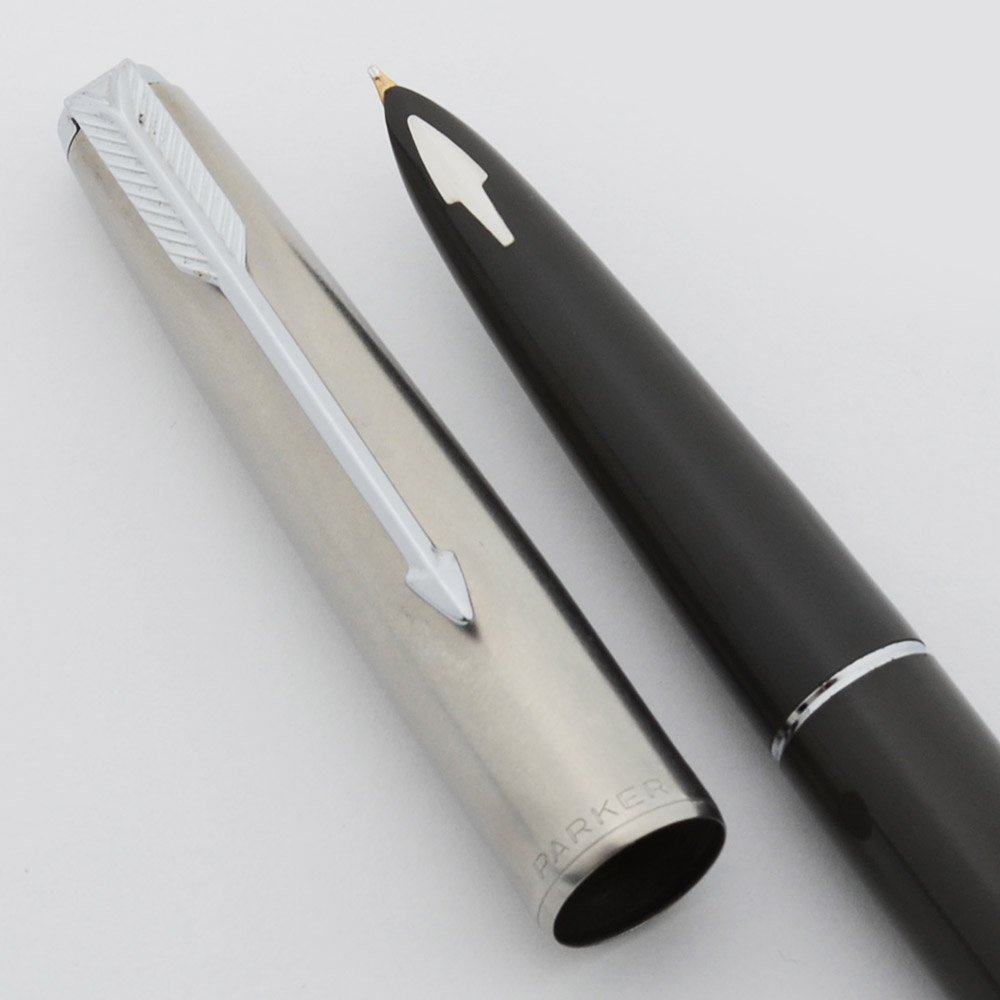
Color Brushed stainless steel "Lustraloy" caps with chrome plated trim. The bodies are on the red side of gray and called, "Charcoal Grey." The pencil has one pearlescent jewel and the pen has two.
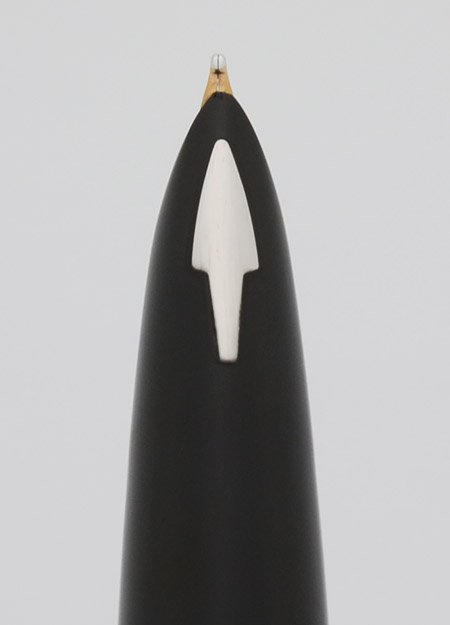
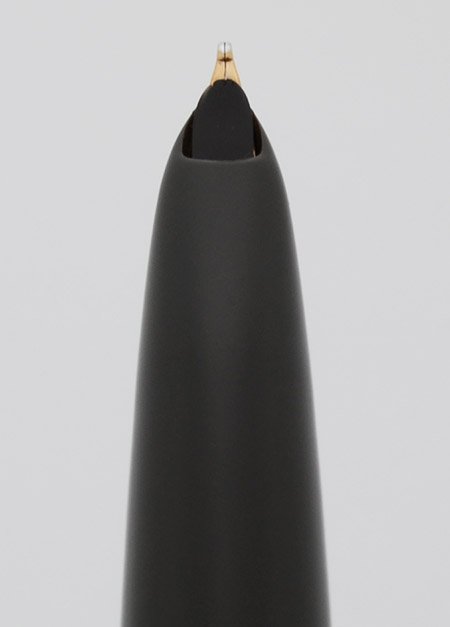
Nib MEDIUM gold nib is smooth with nice round tipping.
Condition Superior Condition. Both have minimal handwear and very intact trim. The lustraloy caps don't have any odd shiny spots and there are only one or two marks on the pencil cone. In the photos it looks like there's some pitting on the clips but it was just grime. There is a cap mark/scratch on the barrel of the fountain pen as a result of capping but that is the worst blemish on both pieces. They ship is a Parker era appropriate box in excellent condition. You'll need to be patient when you fill it the pen for the first time, as it takes a few minutes or so for the capillary system to suck in enough ink to get started.
Here is how you fill a Parker 61, and an insight into how the pen actually works. Unscrew the barrel and stick the back end of the pen (aka the capillary cell) into a bottle of ink. Wait a few minutes (probably more like a half hour when you first start one of these older used ones), and let the ink wick up into the capillary cell. The cell contains a sheet of perforated plastic that has been given a 3-D pattern resembling tire tread, and rolled up. The perforations allow ink to seep between the rolled-up layers, and the tread pattern maintains space between the layers. In the middle of this tube, which runs the entire length of the capillary cell, is the feed. To keep things clean, the capillary cell has on a coating of teflonon the outside that is intended to shed ink as the user withdraws the pen from the ink bottle, leaving very little ink to be wiped off. The end of the barrel contains a spring-loaded thingy which covers the open end of the capillary tube, but still allows it to vent.