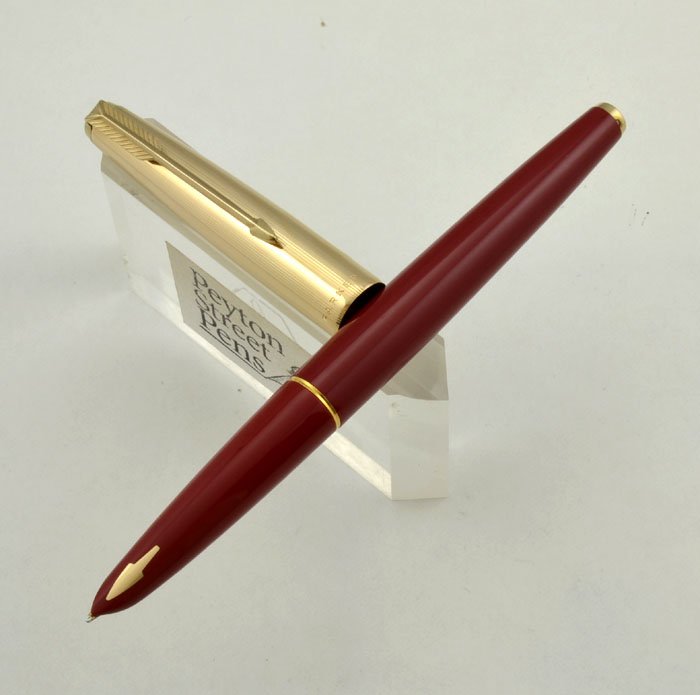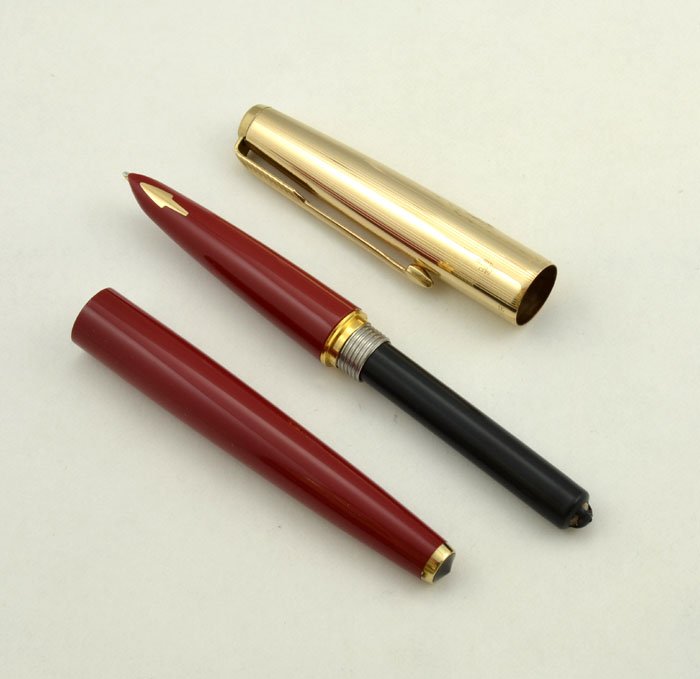
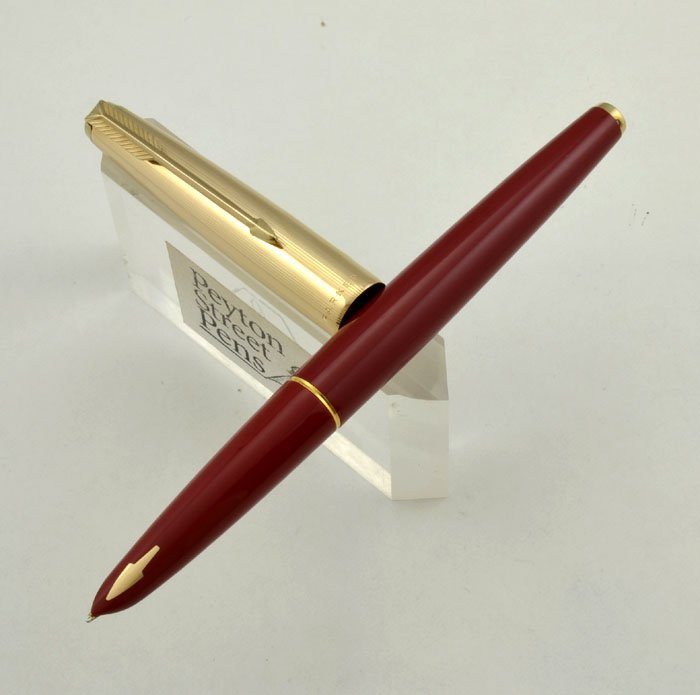
Product Description
| Type | fountain pen |
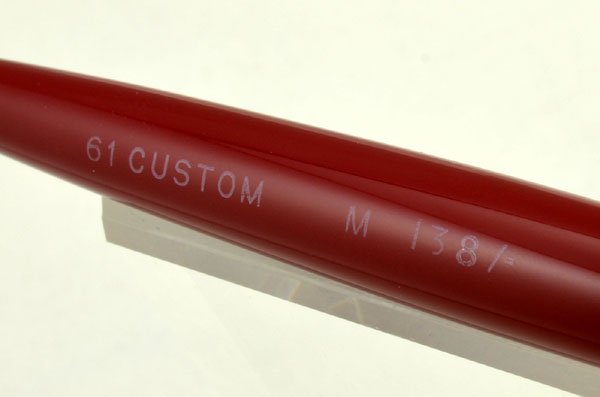
| Product Name | Parker 61 "Custom" (this model featured a rolled gold cap) |
| Manufacturer and Year | Parker -- UK |
| Length | 5-1/4" |
| Filling System | The fountain pen has the capillary filling system which is unique to this model. See further details below. |
| Color | 1/10 12k rolled gold cap. The body is red. Double pearlescent jewels on either end. |
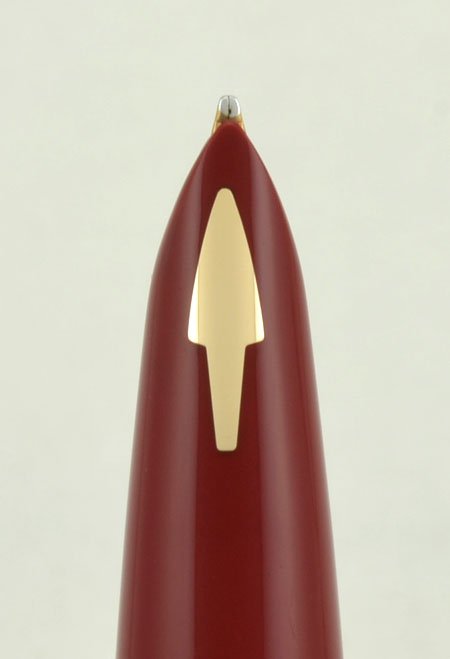
| Nib | The gold nib is medium according to the chalk mark on the barrel. The nib is in perfect condition, barelyused. |
| Condition |
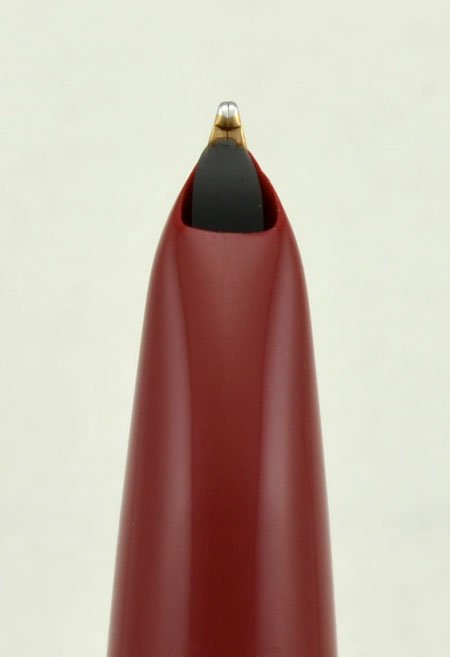
Almost unused condition, both cosmetically and functionally. No scratches or dings or dents, no scratches on the teflon cell. The spring-loaded valve in the end of the barrel is nice and spring-y. When we got it there was a little red ink left in it, which cleaned up and left the sponge that peaks out of the end of the teflon cell almost completely white. The pen had probably been filled just that once, but who knows. |
A word or two about the Parker 61 Capillary Filling System. If you are not familiar with this unique design, you should read this.
Here is how you fill a Parker 61, and an insight into how the pen actually works. Unscrew the barrel and stick the back end of the pen (aka the capillary cell) into a bottle of ink. Wait a few minutes (probably more like a half hour when you first start one of these older used ones), and let the ink wick up into the capillary cell. The cell contains a sheet of perforated plastic that has been given a 3-D pattern resembling tire tread, and rolled up. The perforations allow ink to seep between the rolled-up layers, and the tread pattern maintains space between the layers. In the middle of this tube, which runs the entire length of the capillary cell, is the feed. To keep things clean, the capillary cell has on a coating of teflonon the outside that is intended to shed ink as the user withdraws the pen from the ink bottle, leaving very little ink to be wiped off. The end of the barrel contains a spring-loaded thingey which covers the open end of the capillary tube, but still allows it to vent.